Cooliris (for Desktop), formerly known as PicLens, was a web browser extension developed by Cooliris, Inc, and later acquired by Yahoo. The plugin provides an interactive 3D-like experience for viewing digital images and videos from the web and from desktop applications. The software places a small icon atop image thumbnails that appear on a webpage. Clicking on the icon loads the Cooliris 3D Wall, a browsing environment that gives the user the effect of flying through a three-dimensional space. Released to the public in January 2008, The New York Times described Cooliris as the "new immersive approach to Web navigation". Cooliris went out to win the 2008 Crunchies Award for Best Design. The plugin has received over 50 million downloads. As of May 2014 browser plugins are unavailable from the official website. There are only links to tablet apps - for iOS and Android.
Real-Time UML
Real-Time UML (RTUML) refers to the application of the Unified Modelling Language (UML) for the analysis, design, and implementation of real-time and embedded systems, where timing constraints, concurrency, and resource management are critical. It extends standard UML with profiles, notations, and semantics to handle hard and soft real-time requirements, such as modelling predictable response times and fault tolerance. RTUML is not a separate language but a methodology leveraging UML diagrams (e.g., statecharts, sequence diagrams) for time-sensitive applications like automotive controls, avionics, and medical devices. The term is closely associated with Bruce Powel Douglass, who popularised it through his books and the Harmony process for embedded software development. As of 2025, RTUML remains relevant in industries requiring certified systems, though its adoption varies with agile methodologies and model-driven engineering tools. == Background == Real-Time UML emerged in the late 1990s as UML was standardized by the Object Management Group (OMG) in 1997, addressing the need for object-oriented modeling in real-time systems previously dominated by procedural languages like C. Traditional real-time development relied on "bare metal" programming or theoretical models, but RTUML introduced visual notations for object structure, behaviour, and timing. Bruce Powel Douglass’s 1999 book, Real-Time UML: Developing Efficient Objects for Embedded Systems, formalised the approach, emphasising statecharts for concurrency and timing constraints. Later editions (2004, 2006) incorporated UML 2.0 features like activity and timing diagrams, aligning with OMG’s Real-Time Profile (now part of MARTE—Modelling and Analysis of Real-Time and Embedded Systems). The Harmony process integrates RTUML with executable models for simulation and code generation. RTUML addresses hard real-time systems (e.g., strict deadlines in avionics) versus soft real-time (e.g., media streaming), using UML extensions for schedulability analysis. == Key concepts == RTUML adapts UML diagrams and techniques for real-time needs: Statecharts and Behaviour Modelling: Extended state machines model reactive behaviour, using and-states for concurrency, pseudostates for transitions, and timing constraints (e.g., {duration < 10ms}). Examples include cardiac pacemaker models. Sequence and Interaction Diagrams: Capture message timing, priorities, and resource allocation in multi-threaded systems. Architectural Patterns: Define logical and physical architectures with active objects for concurrency and patterns like observer or publisher-subscriber. Timing and Constraints: Use Object Constraint Language (OCL) for specifying deadlines and priorities. Profiles and Extensions: OMG’s UML Profile for Schedulability, Performance, and Time (SPT) and MARTE add stereotypes like RT::ActiveObject. These support iterative development, from requirements to deployment, often with tools like IBM Rhapsody or Enterprise Architect. == Applications == RTUML is used in: Embedded Systems: Modelling automotive ECUs or UAV controls. Avionics and Defence: DO-178C-compliant designs for fault tolerance. Medical Devices: Pacemakers or ventilators with precise timing. Industrial Automation: RTOS task visualisation via sequence diagrams. Tools like IBM Rhapsody support RTUML for model-based development and code generation in C/C++. == Criticism and adoption == RTUML’s complexity can overwhelm simple systems, and its use in agile environments is limited, where lightweight diagrams are preferred. Surveys indicate UML (including RTUML) is used in 30–50% of embedded projects, often for documentation rather than full model-driven engineering. It remains standard in academia and certified industries like aerospace.
Concurrent MetateM
Concurrent MetateM is a multi-agent language in which each agent is programmed using a set of (augmented) temporal logic specifications of the behaviour it should exhibit. These specifications are executed directly to generate the behaviour of the agent. As a result, there is no risk of invalidating the logic as with systems where logical specification must first be translated to a lower-level implementation. The root of the MetateM concept is Gabbay's separation theorem; any arbitrary temporal logic formula can be rewritten in a logically equivalent past → future form. Execution proceeds by a process of continually matching rules against a history, and firing those rules when antecedents are satisfied. Any instantiated future-time consequents become commitments which must subsequently be satisfied, iteratively generating a model for the formula made up of the program rules. == Temporal Connectives == The Temporal Connectives of Concurrent MetateM can divided into two categories, as follows: Strict past time connectives: '●' (weak last), '◎' (strong last), '◆' (was), '■' (heretofore), 'S' (since), and 'Z' (zince, or weak since). Present and future time connectives: '◯' (next), '◇' (sometime), '□' (always), 'U' (until), and 'W' (unless). The connectives {◎,●,◆,■,◯,◇,□} are unary; the remainder are binary. === Strict past time connectives === ==== Weak last ==== ●ρ is satisfied now if ρ was true in the previous time. If ●ρ is interpreted at the beginning of time, it is satisfied despite there being no actual previous time. Hence "weak" last. ==== Strong last ==== ◎ρ is satisfied now if ρ was true in the previous time. If ◎ρ is interpreted at the beginning of time, it is not satisfied because there is no actual previous time. Hence "strong" last. ==== Was ==== ◆ρ is satisfied now if ρ was true in any previous moment in time. ==== Heretofore ==== ■ρ is satisfied now if ρ was true in every previous moment in time. ==== Since ==== ρSψ is satisfied now if ψ is true at any previous moment and ρ is true at every moment after that moment. ==== Zince, or weak since ==== ρZψ is satisfied now if (ψ is true at any previous moment and ρ is true at every moment after that moment) OR ψ has not happened in the past. === Present and future time connectives === ==== Next ==== ◯ρ is satisfied now if ρ is true in the next moment in time. ==== Sometime ==== ◇ρ is satisfied now if ρ is true now or in any future moment in time. ==== Always ==== □ρ is satisfied now if ρ is true now and in every future moment in time. ==== Until ==== ρUψ is satisfied now if ψ is true at any future moment and ρ is true at every moment prior. ==== Unless ==== ρWψ is satisfied now if (ψ is true at any future moment and ρ is true at every moment prior) OR ψ does not happen in the future.
Artificial brain
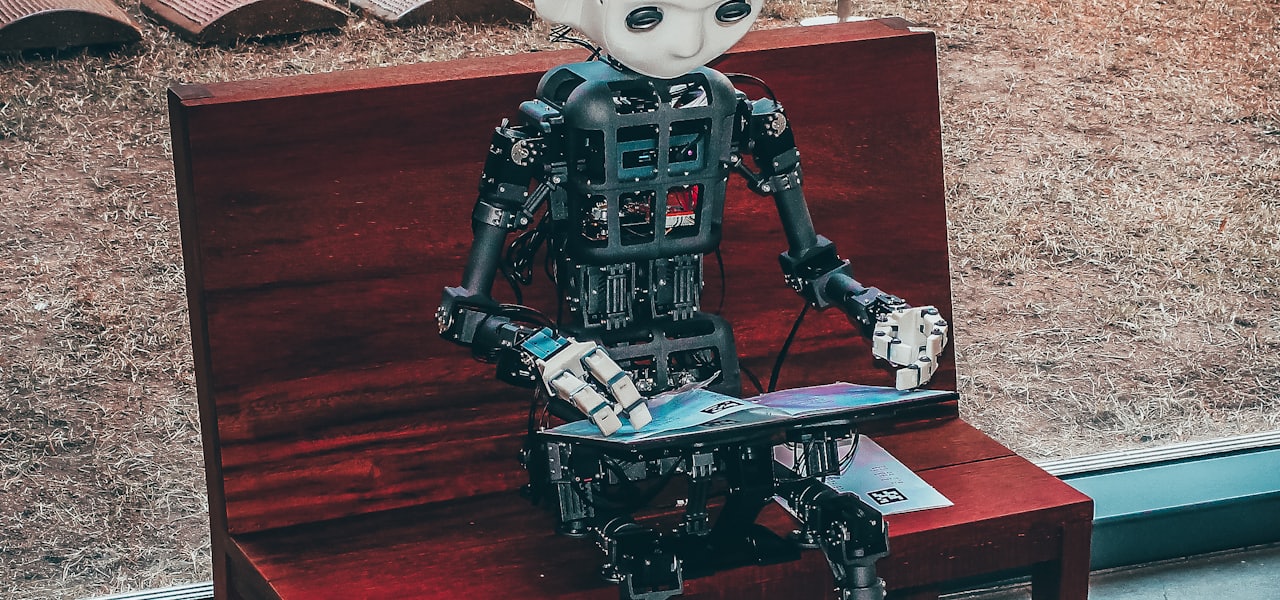
An artificial brain (or artificial mind) is software and hardware with cognitive abilities similar to those of the animal or human brain. Research investigating "artificial brains" and brain emulation plays three important roles in science: An ongoing attempt by neuroscientists to understand how the human brain works, known as cognitive neuroscience. A thought experiment in the philosophy of artificial intelligence, demonstrating that it is possible, at least in theory, to create a machine that has all the capabilities of a human being. A long-term project to create machines exhibiting behavior comparable to those of animals with complex central nervous system such as mammals and most particularly humans. The ultimate goal of creating a machine exhibiting human-like behavior or intelligence is sometimes called strong AI. An example of the first objective is the project reported by Aston University in Birmingham, England where researchers are using biological cells to create "neurospheres" (small clusters of neurons) in order to develop new treatments for diseases including Alzheimer's, motor neurone and Parkinson's disease. The second objective is a reply to arguments such as John Searle's Chinese room argument, Hubert Dreyfus's critique of AI or Roger Penrose's argument in The Emperor's New Mind. These critics argued that there are aspects of human consciousness or expertise that can not be simulated by machines. One reply to their arguments is that the biological processes inside the brain can be simulated to any degree of accuracy. This reply was made as early as 1950, by Alan Turing in his classic paper "Computing Machinery and Intelligence". The third objective is generally called artificial general intelligence by researchers. However, Ray Kurzweil prefers the term "strong AI". In his book The Singularity is Near, he focuses on whole brain emulation using conventional computing machines as an approach to implementing artificial brains, and claims (on grounds of computer power continuing an exponential growth trend) that this could be done by 2025. Henry Markram, director of the Blue Brain project (which is attempting brain emulation), made a similar claim (2020) at the Oxford TED conference in 2009. == Approaches to brain simulation == W. Ross Ashby's pioneering work in cybernetics provided an early mathematical framework for understanding adaptive brain-like systems. In his 1952 book Design for a Brain, Ashby proposed that the brain could be modeled as an ultrastable system that maintains equilibrium through continuous adaptation to environmental perturbations. His approach used differential equations and state-space models to describe how neural systems could exhibit purposeful behavior through feedback mechanisms. Ashby's homeostat, a physical machine built in 1948, demonstrated these principles through an electromechanical device with four interconnected units that automatically adjusted their parameters to maintain stability when disturbed. The homeostat represented one of the first attempts to build an artificial system exhibiting brain-like adaptive behavior, influencing subsequent work in adaptive systems, neural networks, and artificial intelligence. Although direct human brain emulation using artificial neural networks on a high-performance computing engine is a commonly discussed approach, there are other approaches. An alternative artificial brain implementation could be based on Holographic Neural Technology (HNeT) non linear phase coherence/decoherence principles. The analogy has been made to quantum processes through the core synaptic algorithm which has strong similarities to the quantum mechanical wave equation. EvBrain is a form of evolutionary software that can evolve "brainlike" neural networks, such as the network immediately behind the retina. In November 2008, IBM received a US$4.9 million grant from the Pentagon for research into creating intelligent computers. The Blue Brain project is being conducted with the assistance of IBM in Lausanne. The project is based on the premise that it is possible to artificially link the neurons "in the computer" by placing thirty million synapses in their proper three-dimensional position. Some proponents of strong AI speculated in 2009 that computers in connection with Blue Brain and Soul Catcher may exceed human intellectual capacity by around 2015, and that it is likely that we will be able to download the human brain at some time around 2050. While Blue Brain is able to represent complex neural connections on the large scale, the project does not achieve the link between brain activity and behaviors executed by the brain. In 2012, project Spaun (Semantic Pointer Architecture Unified Network) attempted to model multiple parts of the human brain through large-scale representations of neural connections that generate complex behaviors in addition to mapping. Spaun's design recreates elements of human brain anatomy. The model, consisting of approximately 2.5 million neurons, includes features of the visual and motor cortices, GABAergic and dopaminergic connections, the ventral tegmental area (VTA), substantia nigra, and others. The design allows for several functions in response to eight tasks, using visual inputs of typed or handwritten characters and outputs carried out by a mechanical arm. Spaun's functions include copying a drawing, recognizing images, and counting. There are good reasons to believe that, regardless of implementation strategy, the predictions of realising artificial brains in the near future are optimistic. In particular brains (including the human brain) and cognition are not currently well understood, and the scale of computation required is unknown. Another near term limitation is that all current approaches for brain simulation require orders of magnitude larger power consumption compared with a human brain. The human brain consumes about 20 W of power, whereas current supercomputers may use as much as 1 MW—i.e., an order of 100,000 more. == Artificial brain thought experiment == Some critics of brain simulation believe that it is simpler to create general intelligent action directly without imitating nature. Some commentators have used the analogy that early attempts to construct flying machines modeled them after birds, but that modern aircraft do not look like birds.
Artificial brain
An artificial brain (or artificial mind) is software and hardware with cognitive abilities similar to those of the animal or human brain. Research investigating "artificial brains" and brain emulation plays three important roles in science: An ongoing attempt by neuroscientists to understand how the human brain works, known as cognitive neuroscience. A thought experiment in the philosophy of artificial intelligence, demonstrating that it is possible, at least in theory, to create a machine that has all the capabilities of a human being. A long-term project to create machines exhibiting behavior comparable to those of animals with complex central nervous system such as mammals and most particularly humans. The ultimate goal of creating a machine exhibiting human-like behavior or intelligence is sometimes called strong AI. An example of the first objective is the project reported by Aston University in Birmingham, England where researchers are using biological cells to create "neurospheres" (small clusters of neurons) in order to develop new treatments for diseases including Alzheimer's, motor neurone and Parkinson's disease. The second objective is a reply to arguments such as John Searle's Chinese room argument, Hubert Dreyfus's critique of AI or Roger Penrose's argument in The Emperor's New Mind. These critics argued that there are aspects of human consciousness or expertise that can not be simulated by machines. One reply to their arguments is that the biological processes inside the brain can be simulated to any degree of accuracy. This reply was made as early as 1950, by Alan Turing in his classic paper "Computing Machinery and Intelligence". The third objective is generally called artificial general intelligence by researchers. However, Ray Kurzweil prefers the term "strong AI". In his book The Singularity is Near, he focuses on whole brain emulation using conventional computing machines as an approach to implementing artificial brains, and claims (on grounds of computer power continuing an exponential growth trend) that this could be done by 2025. Henry Markram, director of the Blue Brain project (which is attempting brain emulation), made a similar claim (2020) at the Oxford TED conference in 2009. == Approaches to brain simulation == W. Ross Ashby's pioneering work in cybernetics provided an early mathematical framework for understanding adaptive brain-like systems. In his 1952 book Design for a Brain, Ashby proposed that the brain could be modeled as an ultrastable system that maintains equilibrium through continuous adaptation to environmental perturbations. His approach used differential equations and state-space models to describe how neural systems could exhibit purposeful behavior through feedback mechanisms. Ashby's homeostat, a physical machine built in 1948, demonstrated these principles through an electromechanical device with four interconnected units that automatically adjusted their parameters to maintain stability when disturbed. The homeostat represented one of the first attempts to build an artificial system exhibiting brain-like adaptive behavior, influencing subsequent work in adaptive systems, neural networks, and artificial intelligence. Although direct human brain emulation using artificial neural networks on a high-performance computing engine is a commonly discussed approach, there are other approaches. An alternative artificial brain implementation could be based on Holographic Neural Technology (HNeT) non linear phase coherence/decoherence principles. The analogy has been made to quantum processes through the core synaptic algorithm which has strong similarities to the quantum mechanical wave equation. EvBrain is a form of evolutionary software that can evolve "brainlike" neural networks, such as the network immediately behind the retina. In November 2008, IBM received a US$4.9 million grant from the Pentagon for research into creating intelligent computers. The Blue Brain project is being conducted with the assistance of IBM in Lausanne. The project is based on the premise that it is possible to artificially link the neurons "in the computer" by placing thirty million synapses in their proper three-dimensional position. Some proponents of strong AI speculated in 2009 that computers in connection with Blue Brain and Soul Catcher may exceed human intellectual capacity by around 2015, and that it is likely that we will be able to download the human brain at some time around 2050. While Blue Brain is able to represent complex neural connections on the large scale, the project does not achieve the link between brain activity and behaviors executed by the brain. In 2012, project Spaun (Semantic Pointer Architecture Unified Network) attempted to model multiple parts of the human brain through large-scale representations of neural connections that generate complex behaviors in addition to mapping. Spaun's design recreates elements of human brain anatomy. The model, consisting of approximately 2.5 million neurons, includes features of the visual and motor cortices, GABAergic and dopaminergic connections, the ventral tegmental area (VTA), substantia nigra, and others. The design allows for several functions in response to eight tasks, using visual inputs of typed or handwritten characters and outputs carried out by a mechanical arm. Spaun's functions include copying a drawing, recognizing images, and counting. There are good reasons to believe that, regardless of implementation strategy, the predictions of realising artificial brains in the near future are optimistic. In particular brains (including the human brain) and cognition are not currently well understood, and the scale of computation required is unknown. Another near term limitation is that all current approaches for brain simulation require orders of magnitude larger power consumption compared with a human brain. The human brain consumes about 20 W of power, whereas current supercomputers may use as much as 1 MW—i.e., an order of 100,000 more. == Artificial brain thought experiment == Some critics of brain simulation believe that it is simpler to create general intelligent action directly without imitating nature. Some commentators have used the analogy that early attempts to construct flying machines modeled them after birds, but that modern aircraft do not look like birds.
Neural network Gaussian process
A Neural Network Gaussian Process (NNGP) is a Gaussian process (GP) obtained as the limit of a certain type of sequence of neural networks. Specifically, a wide variety of network architectures converges to a GP in the infinitely wide limit, in the sense of distribution. The concept constitutes an intensional definition, i.e., a NNGP is just a GP, but distinguished by how it is obtained. == Motivation == Bayesian networks are a modeling tool for assigning probabilities to events, and thereby characterizing the uncertainty in a model's predictions. Deep learning and artificial neural networks are approaches used in machine learning to build computational models which learn from training examples. Bayesian neural networks merge these fields. They are a type of neural network whose parameters and predictions are both probabilistic. While standard neural networks often assign high confidence even to incorrect predictions, Bayesian neural networks can more accurately evaluate how likely their predictions are to be correct. Computation in artificial neural networks is usually organized into sequential layers of artificial neurons. The number of neurons in a layer is called the layer width. When we consider a sequence of Bayesian neural networks with increasingly wide layers (see figure), they converge in distribution to a NNGP. This large width limit is of practical interest, since the networks often improve as layers get wider. And the process may give a closed form way to evaluate networks. NNGPs also appears in several other contexts: It describes the distribution over predictions made by wide non-Bayesian artificial neural networks after random initialization of their parameters, but before training; it appears as a term in neural tangent kernel prediction equations; it is used in deep information propagation to characterize whether hyperparameters and architectures will be trainable. It is related to other large width limits of neural networks. === Scope === The first correspondence result had been established in the 1995 PhD thesis of Radford M. Neal, then supervised by Geoffrey Hinton at University of Toronto. Neal cites David J. C. MacKay as inspiration, who worked in Bayesian learning. Today the correspondence is proven for: Single hidden layer Bayesian neural networks; deep fully connected networks as the number of units per layer is taken to infinity; convolutional neural networks as the number of channels is taken to infinity; transformer networks as the number of attention heads is taken to infinity; recurrent networks as the number of units is taken to infinity. In fact, this NNGP correspondence holds for almost any architecture: Generally, if an architecture can be expressed solely via matrix multiplication and coordinatewise nonlinearities (i.e., a tensor program), then it has an infinite-width GP. This in particular includes all feedforward or recurrent neural networks composed of multilayer perceptron, recurrent neural networks (e.g., LSTMs, GRUs), (nD or graph) convolution, pooling, skip connection, attention, batch normalization, and/or layer normalization. === Illustration === Every setting of a neural network's parameters θ {\displaystyle \theta } corresponds to a specific function computed by the neural network. A prior distribution p ( θ ) {\displaystyle p(\theta )} over neural network parameters therefore corresponds to a prior distribution over functions computed by the network. As neural networks are made infinitely wide, this distribution over functions converges to a Gaussian process for many architectures. The notation used in this section is the same as the notation used below to derive the correspondence between NNGPs and fully connected networks, and more details can be found there. The figure to the right plots the one-dimensional outputs z L ( ⋅ ; θ ) {\displaystyle z^{L}(\cdot ;\theta )} of a neural network for two inputs x {\displaystyle x} and x ∗ {\displaystyle x^{}} against each other. The black dots show the function computed by the neural network on these inputs for random draws of the parameters from p ( θ ) {\displaystyle p(\theta )} . The red lines are iso-probability contours for the joint distribution over network outputs z L ( x ; θ ) {\displaystyle z^{L}(x;\theta )} and z L ( x ∗ ; θ ) {\displaystyle z^{L}(x^{};\theta )} induced by p ( θ ) {\displaystyle p(\theta )} . This is the distribution in function space corresponding to the distribution p ( θ ) {\displaystyle p(\theta )} in parameter space, and the black dots are samples from this distribution. For infinitely wide neural networks, since the distribution over functions computed by the neural network is a Gaussian process, the joint distribution over network outputs is a multivariate Gaussian for any finite set of network inputs. == Discussion == === Infinitely wide fully connected network === This section expands on the correspondence between infinitely wide neural networks and Gaussian processes for the specific case of a fully connected architecture. It provides a proof sketch outlining why the correspondence holds, and introduces the specific functional form of the NNGP for fully connected networks. The proof sketch closely follows the approach by Novak and coauthors. ==== Network architecture specification ==== Consider a fully connected artificial neural network with inputs x {\displaystyle x} , parameters θ {\displaystyle \theta } consisting of weights W l {\displaystyle W^{l}} and biases b l {\displaystyle b^{l}} for each layer l {\displaystyle l} in the network, pre-activations (pre-nonlinearity) z l {\displaystyle z^{l}} , activations (post-nonlinearity) y l {\displaystyle y^{l}} , pointwise nonlinearity ϕ ( ⋅ ) {\displaystyle \phi (\cdot )} , and layer widths n l {\displaystyle n^{l}} . For simplicity, the width n L + 1 {\displaystyle n^{L+1}} of the readout vector z L {\displaystyle z^{L}} is taken to be 1. The parameters of this network have a prior distribution p ( θ ) {\displaystyle p(\theta )} , which consists of an isotropic Gaussian for each weight and bias, with the variance of the weights scaled inversely with layer width. This network is illustrated in the figure to the right, and described by the following set of equations: x ≡ input y l ( x ) = { x l = 0 ϕ ( z l − 1 ( x ) ) l > 0 z i l ( x ) = ∑ j W i j l y j l ( x ) + b i l W i j l ∼ N ( 0 , σ w 2 n l ) b i l ∼ N ( 0 , σ b 2 ) ϕ ( ⋅ ) ≡ nonlinearity y l ( x ) , z l − 1 ( x ) ∈ R n l × 1 n L + 1 = 1 θ = { W 0 , b 0 , … , W L , b L } {\displaystyle {\begin{aligned}x&\equiv {\text{input}}\\y^{l}(x)&=\left\{{\begin{array}{lcl}x&&l=0\\\phi \left(z^{l-1}(x)\right)&&l>0\end{array}}\right.\\z_{i}^{l}(x)&=\sum _{j}W_{ij}^{l}y_{j}^{l}(x)+b_{i}^{l}\\W_{ij}^{l}&\sim {\mathcal {N}}\left(0,{\frac {\sigma _{w}^{2}}{n^{l}}}\right)\\b_{i}^{l}&\sim {\mathcal {N}}\left(0,\sigma _{b}^{2}\right)\\\phi (\cdot )&\equiv {\text{nonlinearity}}\\y^{l}(x),z^{l-1}(x)&\in \mathbb {R} ^{n^{l}\times 1}\\n^{L+1}&=1\\\theta &=\left\{W^{0},b^{0},\dots ,W^{L},b^{L}\right\}\end{aligned}}} ==== ==== z l | y l {\displaystyle z^{l}|y^{l}} is a Gaussian process We first observe that the pre-activations z l {\displaystyle z^{l}} are described by a Gaussian process conditioned on the preceding activations y l {\displaystyle y^{l}} . This result holds even at finite width. Each pre-activation z i l {\displaystyle z_{i}^{l}} is a weighted sum of Gaussian random variables, corresponding to the weights W i j l {\displaystyle W_{ij}^{l}} and biases b i l {\displaystyle b_{i}^{l}} , where the coefficients for each of those Gaussian variables are the preceding activations y j l {\displaystyle y_{j}^{l}} . Because they are a weighted sum of zero-mean Gaussians, the z i l {\displaystyle z_{i}^{l}} are themselves zero-mean Gaussians (conditioned on the coefficients y j l {\displaystyle y_{j}^{l}} ). Since the z l {\displaystyle z^{l}} are jointly Gaussian for any set of y l {\displaystyle y^{l}} , they are described by a Gaussian process conditioned on the preceding activations y l {\displaystyle y^{l}} . The covariance or kernel of this Gaussian process depends on the weight and bias variances σ w 2 {\displaystyle \sigma _{w}^{2}} and σ b 2 {\displaystyle \sigma _{b}^{2}} , as well as the second moment matrix K l {\displaystyle K^{l}} of the preceding activations y l {\displaystyle y^{l}} , z i l ∣ y l ∼ G P ( 0 , σ w 2 K l + σ b 2 ) K l ( x , x ′ ) = 1 n l ∑ i y i l ( x ) y i l ( x ′ ) {\displaystyle {\begin{aligned}z_{i}^{l}\mid y^{l}&\sim {\mathcal {GP}}\left(0,\sigma _{w}^{2}K^{l}+\sigma _{b}^{2}\right)\\K^{l}(x,x')&={\frac {1}{n^{l}}}\sum _{i}y_{i}^{l}(x)y_{i}^{l}(x')\end{aligned}}} The effect of the weight scale σ w 2 {\displaystyle \sigma _{w}^{2}} is to rescale the contribution to the covariance matrix from K l {\displaystyle K^{l}} , while the bias is shared for all inputs, and so σ b 2 {\displaystyle \sigma _{b}^{2}} makes the z i l {\displaystyle z_{i}^{l}} for different datapoints more similar and
Aporia (company)
Aporia is a machine learning observability platform based in Tel Aviv, Israel. The company has a US office located in San Jose, California. Aporia has developed software for monitoring and controlling undetected defects and failures used by other companies to detect and report anomalies, and warn in the early stages of faults. == History == Aporia was founded in 2019 by Liran Hason and Alon Gubkin. In April 2021, the company raised a $5 million seed round for its monitoring platform for ML models. In February 2022, the company closed a Series A round of $25 million for its ML observability platform. Aporia was named by Forbes as the Next Billion-Dollar Company in June 2022. In November, the company partnered with ClearML, an MLOPs platform, to improve ML pipeline optimization. In January 2023, Aporia launched Direct Data Connectors, a novel technology allowing organizations to monitor their ML models in minutes (previously the process of integrating ML monitoring into a customer’s cloud environment took weeks or more.) DDC (Direct Data Connectors) enables users to connect Aporia to their preferred data source and monitor all of their data at once, without data sampling or data duplication (which is a huge security risk for major organizations. In April 2023, Aporia announced the company partnered with Amazon Web Services (AWS) to provide more reliable ML observability to AWS consumers by deploying Aporia's architecture to their AWS environment, this will allow customers to monitor their models in production regardless of platform.