Bazaart is an AI-powered design platform with image and video editing capabilities for iOS, Android, MacOS, and the web. == History == Bazaart was founded in 2012 in Israel. In April 2012, Bazaart launched a Facebook app called Pinvolve, which converts Facebook Pages into Pinterest pinboards. From June to August 2012, it participated in the DreamIt startup accelerator in New York and raised $25,000 from the accelerator. In July 2012, it launched its first version as an iPad app connected to Pinterest. In December 2013, it pivoted and launched a major version of its app, a "social" photoshop that allowed users to edit images which could be pulled in from the camera roll, social networks, and other sources. In July 2014, Bazaart reached one million downloads and in December was selected by Apple as Best of 2014. In 2015, Bazaart added Photoshop integration in a partnership with Adobe. In September 2020, Bazaart launched an Android app. In December 2020, Bazaart was selected by Google as Best of 2020. In January 2022, Bazaart added video editing capabilities. In 2023, the platform added AI-powered backgrounds and video background removal features.
DryvIQ
DryvIQ is a software application that enables businesses to migrate on-site system files and associated data across storage and content management platforms, as well as create synchronized hybrid storage systems. == History == Before it was DryvIQ, the software SkySync was released in 2013 by Ann Arbor, Michigan based company, Portal Architects, Inc. The company created SkySync, a back-end, administrative application designed to transfer content across storage platforms, after abandoning 18 months of development on a desktop application called SkyBrary in 2011. Between 2014 and 2015, Portal Architects established partnerships with the following companies: Autodesk, Box, Dropbox, Egnyte, EMC, Google, Syncplicity, Huddle, IBM, Microsoft, OpenText, Oracle, Citrix ShareFile, Hightail and Internet2. SkySync (currently DryvIQ) was named a "Cool Vendor in Content Management" by Gartner in 2015. In 2022, SkySync changed its name to DryvIQ, which is now what the company is currently known as. == Overview == DryvIQ is a software application that syncs, migrates or backs up files including their associated properties, metadata, versions, user accounts and permissions across on-premises and Cloud-based storage platforms. The software deploys on a server, virtual machine or within Microsoft Azure, Amazon Web Services or other cloud computing services.
VIGRA
VIGRA is the abbreviation for "Vision with Generic Algorithms". It is a free open-source computer vision library which focuses on customizable algorithms and data structures. VIGRA component can be easily adapted to specific needs of target application without compromising execution speed, by using template techniques similar to those in the C++ Standard Template Library. == Features == VIGRA is cross-platform, with working builds on Microsoft Windows, Mac OS X, Linux, and OpenBSD. Since version 1.7.1, VIGRA provides Python bindings based on numpy framework. == History == VIGRA was originally designed and implemented by scientists at University of Hamburg faculty of computer science; its core maintainers are now working at Heidelberg Collaboratory for Image Processing (HCI) University of Heidelberg. In the meantime, many developers have contributed to the project. == Application == CellCognition and ilastik uses VIGRA computer vision library. OpenOffice.org uses VIGRA as part of its headless software rendering backend; LibreOffice does so until version 5.2.
International Conference on Computer Vision
The International Conference on Computer Vision (ICCV) is a research conference sponsored by the Institute of Electrical and Electronics Engineers (IEEE) held every other year. It is considered to be one of the top conferences in computer vision, alongside CVPR and ECCV, and it is held on years in which ECCV is not. The conference is usually spread over four to five days. Typically, experts in the focus areas give tutorial talks on the first day, then the technical sessions (and poster sessions in parallel) follow. Recent conferences have also had an increasing number of focused workshops and a commercial exhibition. == Awards == === Azriel Rosenfeld Lifetime Achievement Award === The Azriel Rosenfeld Award, or Azriel Rosenfeld Lifetime Achievement Award, recognizes researchers who have made significant contributions to the field of computer vision over their careers. It is named in memory of computer scientist and mathematician Azriel Rosenfeld. The following people have received this award: === Helmholtz Prize === The ICCV Helmholtz Prize, known as the Test of Time Award before 2013, is awarded every other year at the ICCV, recognizing ICCV papers from ten or more years earlier that had a significant impact on computer vision research. Winners are selected by the IEEE Computer Society's Technical Committee on Pattern Analysis and Machine Intelligence. The award is named after the 19th century physician and physicist Hermann von Helmholtz, and the ICCV's award is not related to the various Helmholtz Prizes in physics, or the Hermann von Helmholtz Prize in neuroscience. === Marr Prize === The ICCV best-paper award is the Marr Prize, named after British neuroscientist David Marr. === Mark Everingham Prize === The Mark Everingham Prize is an award given yearly by the Technical Committee on Pattern Analysis and Machine Intelligence of the IEEE Computer Society at the IEEE International Conference on Computer Vision or the European Conference on Computer Vision to commemorate the late Mark Everingham, "one of the rising stars of computer vision", and to encourage others to follow in his footsteps by acting to further progress in the computer vision community as a whole. The prize is given to a researcher, or a team of researchers, who have made a selfless contribution of significant benefit to other members of the computer vision community. The Mark Everingham Prize for Rigorous Evaluation was an award given in 2012 at the British Machine Vision Conference. === PAMI Distinguished Researcher Award === The PAMI Distinguished Researcher Award (until 2013 called Significant Researcher Award) is awarded to candidates whose research projects have significantly contributed to the progress of computer vision. Awards are made based on major research contributions, as well as the role of those contributions in influencing and inspiring other research. Candidates are nominated by the community. The following people have received this award: == Conference list == The conference is usually held in the Spring in various international locations.
Cultural algorithm
Cultural algorithms (CA) are a branch of evolutionary computation where there is a knowledge component that is called the belief space in addition to the population component. In this sense, cultural algorithms can be seen as an extension to a conventional genetic algorithm. Cultural algorithms were introduced by Reynolds (see references). == Belief space == The belief space of a cultural algorithm is divided into distinct categories. These categories represent different domains of knowledge that the population has of the search space. The belief space is updated after each iteration by the best individuals of the population. The best individuals can be selected using a fitness function that assesses the performance of each individual in population much like in genetic algorithms. === List of belief space categories === Normative knowledge A collection of desirable value ranges for the individuals in the population component e.g. acceptable behavior for the agents in population. Domain specific knowledge Information about the domain of the cultural algorithm problem is applied to. Situational knowledge Specific examples of important events - e.g. successful/unsuccessful solutions Temporal knowledge History of the search space - e.g. the temporal patterns of the search process Spatial knowledge Information about the topography of the search space == Population == The population component of the cultural algorithm is approximately the same as that of the genetic algorithm. == Communication protocol == Cultural algorithms require an interface between the population and belief space. The best individuals of the population can update the belief space via the update function. Also, the knowledge categories of the belief space can affect the population component via the influence function. The influence function can affect population by altering the genome or the actions of the individuals. == Pseudocode for cultural algorithms == Initialize population space (choose initial population) Initialize belief space (e.g. set domain specific knowledge and normative value-ranges) Repeat until termination condition is met Perform actions of the individuals in population space Evaluate each individual by using the fitness function Select the parents to reproduce a new generation of offspring Let the belief space alter the genome of the offspring by using the influence function Update the belief space by using the accept function (this is done by letting the best individuals to affect the belief space) == Applications == Various optimization problems Social simulation Real-parameter optimization
Human–robot interaction
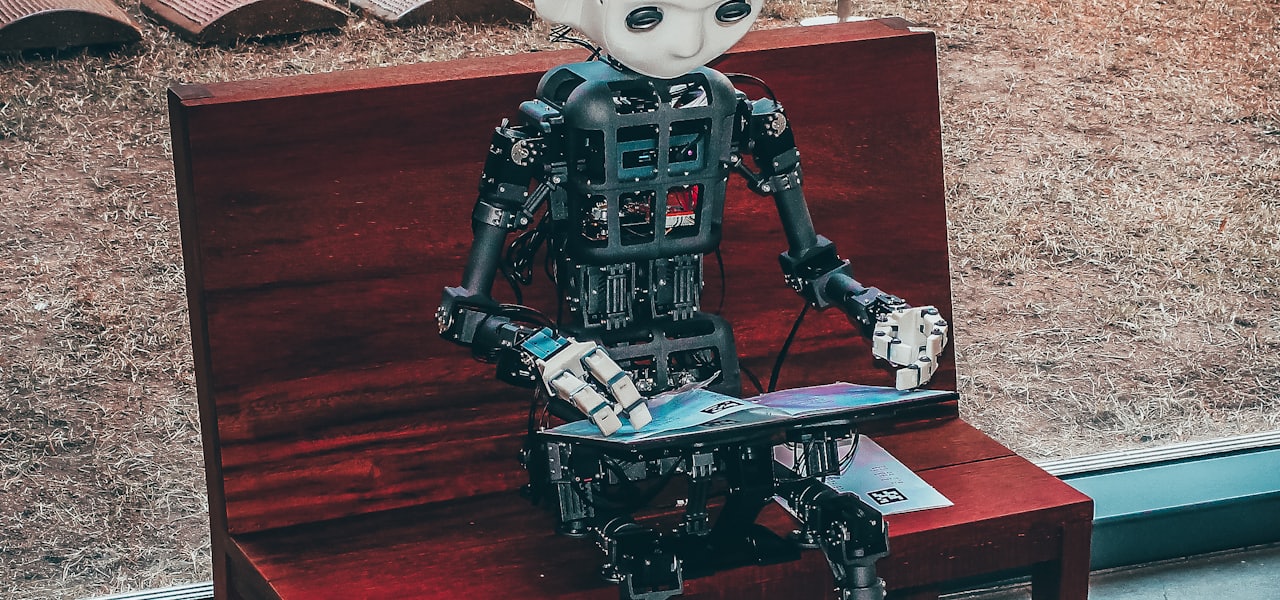
Human–robot interaction (HRI) is the study of interactions between humans and robots. Human–robot interaction is a multidisciplinary field with contributions from human–computer interaction, artificial intelligence, robotics, natural language processing, design, psychology and philosophy. A subfield known as physical human–robot interaction (pHRI) has tended to focus on device design to enable people to safely interact with robotic systems. == Origins == Human–robot interaction has been a topic of both science fiction and academic speculation even before any robots existed. Because much of active HRI development depends on natural language processing, many aspects of HRI are continuations of human communications, a field of research which is much older than robotics. The origin of HRI as a discrete problem was stated by 20th-century author Isaac Asimov in 1941, in his novel I, Robot. Asimov coined Three Laws of Robotics, namely: A robot may not injure a human being or, through inaction, allow a human being to come to harm. A robot must obey the orders given it by human beings except where such orders would conflict with the First Law. A robot must protect its own existence as long as such protection does not conflict with the First or Second Laws. These three laws provide an overview of the goals engineers and researchers hold for safety in the HRI field, although the fields of robot ethics and machine ethics are more complex than these three principles. However, generally human–robot interaction prioritizes the safety of humans that interact with potentially dangerous robotics equipment. Solutions to this problem range from the philosophical approach of treating robots as ethical agents (individuals with moral agency), to the practical approach of creating safety zones. These safety zones use technologies such as lidar to detect human presence or physical barriers to protect humans by preventing any contact between machine and operator. Although initially robots in the human–robot interaction field required some human intervention to function, research has expanded this to the extent that fully autonomous systems are now far more common than in the early 2000s. Autonomous systems include from simultaneous localization and mapping systems which provide intelligent robot movement to natural-language processing and natural-language generation systems which allow for natural, human-esque interaction which meet well-defined psychological benchmarks. Anthropomorphic robots (machines which imitate human body structure) are better described by the biomimetics field, but overlap with HRI in many research applications. Examples of robots which demonstrate this trend include Willow Garage's PR2 robot, the NASA Robonaut, and Honda ASIMO. However, robots in the human–robot interaction field are not limited to human-like robots: Paro and Kismet are both robots designed to elicit emotional response from humans, and so fall into the category of human–robot interaction. Goals in HRI range from industrial manufacturing through Cobots, medical technology through rehabilitation, autism intervention, and elder care devices, entertainment, human augmentation, and human convenience. Future research therefore covers a wide range of fields, much of which focuses on assistive robotics, robot-assisted search-and-rescue, and space exploration. == The goal of friendly human–robot interactions == Robots are artificial agents with capacities of perception and action in the physical world often referred by researchers as workspace. Their use has been generalized in factories but nowadays they tend to be found in the most technologically advanced societies in such critical domains as search and rescue, military battle, mine and bomb detection, scientific exploration, law enforcement, entertainment and hospital care. These new domains of applications imply a closer interaction with the user, sharing the workspace but also goals in terms of task achievement. The subfield of physical human–robot interaction (pHRI) has largely focused on device design to enable people to safely interact with robotic systems but is increasingly developing algorithmic approaches in an attempt to support fluent and expressive interactions between humans and robotic systems. With the advance in AI, the research is focusing on one part towards the safest physical interaction but also on a socially correct interaction, dependent on cultural criteria. The goal is to build an intuitive, and easy communication with the robot through speech, gestures, and facial expressions. Kerstin Dautenhahn refers to friendly Human–robot interaction as "Robotiquette" defining it as the "social rules for robot behaviour (a 'robotiquette') that is comfortable and acceptable to humans" The robot has to adapt itself to our way of expressing desires and orders and not the contrary. But every day environments such as homes have much more complex social rules than those implied by factories or even military environments. Thus, the robot needs perceiving and understanding capacities to build dynamic models of its surroundings. It needs to categorize objects, recognize and locate humans and further recognize their emotions. The need for dynamic capacities pushes forward every sub-field of robotics. Furthermore, by understanding and perceiving social cues, robots can enable collaborative scenarios with humans. For example, with the rapid rise of personal fabrication machines such as desktop 3D printers, laser cutters, etc., entering our homes, scenarios may arise where robots can collaboratively share control, co-ordinate and achieve tasks together. Industrial robots have already been integrated into industrial assembly lines and are collaboratively working with humans. The social impact of such robots have been studied and has indicated that workers still treat robots and social entities, rely on social cues to understand and work together. On the other end of HRI research the cognitive modelling of the "relationship" between human and the robots benefits the psychologists and robotic researchers the user study are often of interests on both sides. This research endeavours part of human society. For effective human – humanoid robot interaction numerous communication skills and related features should be implemented in the design of such artificial agents/systems. == General HRI research == HRI research spans a wide range of fields, some general to the nature of HRI. === Methods for perceiving humans === Methods for perceiving humans in the environment are based on sensor information. Research on sensing components and software led by Microsoft provide useful results for extracting the human kinematics (see Kinect). An example of older technique is to use colour information for example the fact that for light skinned people the hands are lighter than the clothes worn. In any case a human modelled a priori can then be fitted to the sensor data. The robot builds or has (depending on the level of autonomy the robot has) a 3D mapping of its surroundings to which is assigned the humans locations. Most methods intend to build a 3D model through vision of the environment. The proprioception sensors permit the robot to have information over its own state. This information is relative to a reference. Theories of proxemics may be used to perceive and plan around a person's personal space. A speech recognition system is used to interpret human desires or commands. By combining the information inferred by proprioception, sensor and speech the human position and state (standing, seated). In this matter, natural-language processing is concerned with the interactions between computers and human (natural) languages, in particular how to program computers to process and analyze large amounts of natural-language data. For instance, neural-network architectures and learning algorithms that can be applied to various natural-language processing tasks including part-of-speech tagging, chunking, named-entity recognition, and semantic role labeling. === Methods for motion planning === Motion planning in dynamic environments is a challenge that can at the moment only be achieved for robots with 3 to 10 degrees of freedom. Humanoid robots or even 2 armed robots, which can have up to 40 degrees of freedom, are unsuited for dynamic environments with today's technology. However lower-dimensional robots can use the potential field method to compute trajectories which avoid collisions with humans. === Cognitive models and theory of mind === Humans exhibit negative social and emotional responses as well as decreased trust toward some robots that closely, but imperfectly, resemble humans; this phenomenon has been termed the "Uncanny Valley". However recent research in telepresence robots has established that mimicking human body postures and expressive gestures has made the robots likeable and engaging in a remote setting. Further, the presence o
Harrison White
Harrison Colyar White (March 21, 1930 – May 18, 2024) was an American sociologist who was the Giddings Professor of Sociology at Columbia University. White played an influential role in the “Harvard Revolution” in social networks and the New York School of relational sociology. He is credited with the development of a number of mathematical models of social structure including vacancy chains and blockmodels. He has been a leader of a revolution in sociology that is still in process, using models of social structure that are based on patterns of relations instead of the attributes and attitudes of individuals. Among social network researchers, White is widely respected. For instance, at the 1997 International Network of Social Network Analysis conference, the organizer held a special “White Tie” event, dedicated to White. Social network researcher Emmanuel Lazega refers to him as both “Copernicus and Galileo” because he invented both the vision and the tools. The most comprehensive documentation of his theories can be found in the book Identity and Control, first published in 1992. A major rewrite of the book appeared in June 2008. In 2011, White received the W.E.B. DuBois Career of Distinguished Scholarship Award from the American Sociological Association, which honors "scholars who have shown outstanding commitment to the profession of sociology and whose cumulative work has contributed in important ways to the advancement of the discipline." Before his retirement to live in Tucson, Arizona, White was interested in sociolinguistics and business strategy as well as sociology. == Life and career == === Early years === White was born on March 21, 1930, in Washington, D.C. He had three siblings and his father was a doctor in the US Navy. Although moving around to different Naval bases throughout his adolescence, he considered himself Southern, and Nashville, TN to be his home. At the age of 15, he entered the Massachusetts Institute of Technology (MIT), receiving his undergraduate degree at 20 years of age; five years later, in 1955, he received a doctorate in theoretical physics, also from MIT with John C. Slater as his advisor. His dissertation was titled A quantum-mechanical calculation of inter-atomic force constants in copper. This was published in the Physical Review as "Atomic Force Constants of Copper from Feynman's Theorem" (1958). While at MIT he also took a course with the political scientist Karl Deutsch, who White credits with encouraging him to move toward the social sciences. === Princeton University === After receiving his PhD in theoretical physics, he received a Fellowship from the Ford Foundation to begin his second doctorate in sociology at Princeton University. His dissertation advisor was Marion J. Levy. White also worked with Wilbert Moore, Fred Stephan, and Frank W. Notestein while at Princeton. His cohort was very small, with only four or five other graduate students including David Matza, and Stanley Udy. At the same time, he took up a position as an operations analyst at the Operations Research Office, Johns Hopkins University from 1955 to 1956. During this period, he worked with Lee S. Christie on Queuing with Preemptive Priorities or with Breakdown, which was published in 1958. Christie previously worked alongside mathematical psychologist R. Duncan Luce in the Small Group Laboratory at MIT while White was completing his first PhD in physics also at MIT. While continuing his studies at Princeton, White also spent a year as a fellow at the Center for Advanced Study in the Behavioral Sciences, Stanford University, California where he met Harold Guetzkow. Guetzkow was a faculty member at the Carnegie Institute of Technology, known for his application of simulations to social behavior and long-time collaborator with many other pioneers in organization studies, including Herbert A. Simon, James March, and Richard Cyert. Upon meeting Simon through his mutual acquaintance with Guetzkow, White received an invitation to move from California to Pittsburgh to work as an assistant professor of Industrial Administration and Sociology at the Graduate School of Industrial Administration, Carnegie Institute of Technology (later Carnegie-Mellon University), where he stayed for a couple of years, between 1957 and 1959. In an interview, he claimed to have fought with the dean, Leyland Bock, to have the word "sociology" included in his title. It was also during his time at the Stanford Center for Advanced Study that White met his first wife, Cynthia A. Johnson, who was a graduate of Radcliffe College, where she had majored in art history. The couple's joint work on the French Impressionists, Canvases and Careers (1965) and “Institutional Changes in the French Painting World” (1964), originally grew out of a seminar on art in 1957 at the Center for Advanced Study led by Robert Wilson. White originally hoped to use sociometry to map the social structure of French art to predict shifts, but he had an epiphany that it was not social structure but institutional structure which explained the shift. It was also during these years that White, still a graduate student in sociology, wrote and published his first social scientific work, "Sleep: A Sociological Interpretation" in Acta Sociologica in 1960, together with Vilhelm Aubert, a Norwegian sociologist. This work was a phenomenological examination of sleep which attempted to "demonstrate that sleep was more than a straightforward biological activity... [but rather also] a social event". For his dissertation, White carried out empirical research on a research and development department in a manufacturing firm, consisting of interviews and a 110-item questionnaire with managers. He specifically used sociometric questions, which he used to model the "social structure" of relationships between various departments and teams in the organization. In May 1960 he submitted as his doctoral dissertation, titled Research and Development as a Pattern in Industrial Management: A Case Study in Institutionalisation and Uncertainty, earning a PhD in sociology from Princeton University. His first publication based on his dissertation was ''Management conflict and sociometric structure'' in the American Journal of Sociology. === University of Chicago === In 1959 James Coleman left the University of Chicago to found a new department of social relations at Johns Hopkins University, this left a vacancy open for a mathematical sociologist like White. He moved to Chicago to start working as an associate professor at the Department of Sociology. At that time, highly influential sociologists, such as Peter Blau, Mayer Zald, Elihu Katz, Everett Hughes, Erving Goffman were there. As Princeton only required one year in residence, and White took the opportunity to take positions at Johns Hopkins, Stanford, and Carnegie while still working on his dissertation, it was at Chicago that White credits as being his "real socialization in a way, into sociology." It was here that White advised his first two graduate students Joel H. Levine and Morris Friedell, both who went on to make contributions to social network analysis in sociology. While at the Center for Advanced Study, White began learning anthropology and became fascinated with kinship. During his stay at the University of Chicago White was able to finish An Anatomy of Kinship, published in 1963 within the Prentice-Hall series in Mathematical Analysis of Social Behavior, with James Coleman and James March as chief editors. The book received significant attention from many mathematical sociologists of the time, and contributed greatly to establish White as a model builder. === The Harvard Revolution === In 1963, White left Chicago to be an associate professor of sociology at the Harvard Department of Social Relations—the same department founded by Talcott Parsons and still heavily influenced by the structural-functionalist paradigm of Parsons. As White previously only taught graduate courses at Carnegie and Chicago, his first undergraduate course was An Introduction to Social Relations (see Influence) at Harvard, which became infamous among network analysts. As he "thought existing textbooks were grotesquely unscientific," the syllabus of the class was noted for including few readings by sociologists, and comparatively more readings by anthropologists, social psychologists, and historians. White was also a vocal critic of what he called the "attributes and attitudes" approach of Parsonsian sociology, and came to be the leader of what has been variously known as the “Harvard Revolution," the "Harvard breakthrough," or the "Harvard renaissance" in social networks. He worked closely with small group researchers George C. Homans and Robert F. Bales, which was largely compatible with his prior work in organizational research and his efforts to formalize network analysis. Overlapping White's early years, Charles Tilly, a graduate of the Harvard Department of Social